Tomorrow, Sunday, June 30, 2013, from 10 AM - noon, Beth Groundwater will sign copies of her June release, Fatal Descent, and the other two books in her RM Outdoor Adventures mystery series at the Murder By the Book booth at the Pearl Street Farmers Market, 1500 block of South Pearl Street, Denver, CO 80209.
Midnight Ink author Beth Groundwaterwill sign copies of her June release, Fatal Descent,
and her other two books in her RM Outdoor Adventures mystery series on
Thursday, July 4th, from 11 AM to 1 PM, after the parade, at The French
Kiss, 226 South Main Street, Breckenridge, CO 80424.
There’s an old Japanese saying
that I’m very fond of. It goes something like this: “Every person should walk
to the top of Mount Fuji, but only a fool would do it a second time.”
Color me foolish.
I spent three years working as
a full-time novelist. I had just finished my fourth book, A Fine and Dangerous Season, when I went to a New Year’s Party. The
host asked me what I was going to do next. I told her I didn’t have an idea for
a new book. She asked if I would consider going back into the Silicon Valley
fray and taking on a day job. I told her maybe, it depended on the job, and poof!
– a few months later I was working at a DNA sequencing company. Fascinating
work but that company was just purchased and so now I’m ready to give full-time
writing another whirl no matter how ga-ga a Japanese sage might consider me.
I’ve tried publishing the
traditional way and I’ve tried publishing e-books myself. Both ways worked
fine, but I want to expand my readership. To quote another sage, Albert
Einstein: “Insanity is doing the same thing over and over and expecting
different results.”
So I am moving to full-time
novel-writing for a second time, but am trying something different.
When Rob Thomas wanted to make
a Veronica Mars movie, he raised $5 million from fans to get the project kick-started. Now I am not looking for that kind of money, but I do want to
kick-start publication of my fifth novel, a thriller set in Jerusalem titled Temple Mount. I am terrifically excited
at the prospect of building a groundswell of support for Temple Mount among readers of my novels, both past and future. I’m
even ready to rely on supporters to crowd-source the editing of the manuscript.
I just hope others will join
this possibly foolish, but probably sane author in getting Temple Mount published using a new crowd-publishing model. You can
check out what I have in mind here. Don’t know if it’s going to work, but I’m
going to give it a try. Please don’t be shy in offering advice and wish me
luck!
Years ago I made a huge geographical error in Talk Gertie to Me, my
first published novel. Even though the manuscript had been read by members of
my critique group, my agent, my acquiring editor, and the line and copy editors
at the publishing house, no one caught the fact that I’d set the Mississippi
River on the wrong side of Iowa. It took a reader to point the error out to me
within weeks of the book’s release.
His comment came as a shock because I really do
remember pulling the Atlas off my bookshelf and checking the location of the
river. This was before Google Maps, and unfortunately, the Atlas was small, and
my eyesight isn’t what it used to be, thanks to so many hours each day staring
at a computer screen. The font was way too small to read. I saw a line
bisecting the map of the United States and running down into the Gulf of
Mexico. I assumed it was the Mississippi. It wasn’t. I
should have noticed that what I thought was the river didn’t come anywhere
near the state of Mississippi. I was mortified that I’d made such a dumb
mistake and upset that no one had caught it before the book went to press.
Ever since then, I’ve checked and double-checked all
the facts and every piece of research I do for my books, especially when it
comes to geography. Since that first published book (which has since been
corrected for the e-book release,) I’ve also had the good fortune to work with
editors who took their responsibilities more seriously and always double-check
my research. Readers notice when you make mistakes, and they let you know about
them. Few things are more disheartening than receiving an email from a reader
who points out you need a remedial course in geography!
However, I’ve come to realize that novel authors are
held to a much higher standard than scriptwriters, who apparently have even
less of a grasp on geography than I do. Over the past few years I’ve come
across countless geographical errors in television shows.
The first time I became aware of this was watching House. That show was set in the
fictional Princeton-Plainsboro Medical Center in New Jersey. I live in New
Jersey. I know the Princeton and Plainsboro areas. And I know that no one would
ever hop a plane to get from there to Baltimore for a conference, as House and
Stacy did in one episode. It’s only a 2-1/2 hour drive. When you consider the
distance to either the Philadelphia or Newark airport and the time needed to
get through security, you could be in Baltimore before the plane took off. Why
didn’t the writers know this? Unlike me, they certainly had Google Maps
available to them at the time.
If you’re going to set a story in a location you
don’t know well or even at all, you need to learn about the area. Yet time and
again I see television shows where the writers don’t even bother to check out the
basics. I recently watched an episode of a show set in Philadelphia. The series,
now cancelled, was actually filmed in Rhode Island, and maybe that’s the
problem because except for some of the establishing shots in the opening
credits and some scenes that take place in the suburbs, there’s nothing
remotely similar to Philadelphia in the show’s exterior scenes.
In the last episode of the show, they gave a location
where a witness could be found. The two streets they mentioned don’t intersect;
they’re actually the same street, the name changing after the street crosses
over into another county. On top of that, the area is quite urban, and the show
portrayed the home as a quaint cape cod on a bucolic street. I went to college
a block from that supposed location. Trust me, there’s nothing bucolic about
it!
In that same episode, the camera zooms in on a piece
of paper with the protagonist’s address. The writers have her living on 14th
Street. The problem, though, is that there is no 14th Street in Philadelphia.
What should be 14th Street is called Broad Street. It’s the main intersection
that runs the length of the city. Anyone with even a passing knowledge of the
City of Brotherly Love would be aware of this. Apparently, the show’s writers
never took a field trip to the city where they were setting their show.
Someone pointed out to me that perhaps the writers
did this deliberately so as not to show an actual address. If that were the
case, they could have simply given the building a number that didn’t exist.
Few people would be aware of that, but many people know there’s no 14th Street
in Philadelphia.
Little things like this bother me. They pull me from
the story. So I completely understand why that reader years ago was annoyed
that I’d placed the Mississippi on the wrong end of his state. I learned my
lesson and work hard not to make mistakes in my books. Maybe scriptwriters
don’t have the luxury of time to research carefully, or maybe they figure
viewers won’t notice or care. Probably most TV viewers don’t unless they happen
to live in the city or state where the story takes place.
Do errors like this in books, movies, and television
shows bother you, or am I being too picky? Do they pull you from the story? Do
you continue to read authors or watch shows that make mistakes because the
story or characters are so intriguing, or do you give up and move on to other
authors and shows?
***
Award-winning author Lois Winston writes the critically
acclaimed Anastasia Pollack Crafting Mystery series featuring magazine crafts
editor and reluctant amateur sleuth Anastasia Pollack. Lois is also published
in women’s fiction, romance, romantic suspense, and non-fiction under her own
name and her Emma Carlyle pen name. In addition, she’s an award-winning crafts
and needlework designer and an agent with the Ashley Grayson Literary Agency.
Visit Lois at http://www.loiswinston.com,
visit Emma at http://www.emmacarlyle.com,
and visit Anastasia at the Killer Crafts & Crafty Killers character blog, www.anastasiapollack.blogspot.com.
I'm lucky in that I have one foot in both
publishing worlds. I was blessed with what many dream of, a book deal with an
actual publisher. If you go into the mystery section of Barnes & Noble
chances are you'll find a Jennifer Harlow there. Eventually six of them, at the
very least. The first time I saw one, I almost burst into tears and had to
flee. It was one of the best moments of my life. But with the slow seemingly “death”
of brick and mortar bookstores (still miss you Borders), mergers of the big
publishing houses, and boom of ebooks most authors may never get that
experience. As of right now the ratio of physical vs. ebooks sold is 60/40 but
just three years ago it was 90/10. We all knew what happened to the music
industry when iTunes came around. (I can't remember the last time I bought an
actual CD.) So times, they are a'changin. If that’s a good or bad thing is up
for debate, but my gypsy soul wanted to give this new time a try.
At the bare minimum you need a manuscript, a
cover, and a blurb, all of which you can slap together yourself. Might cost you
nothing. Put it up on Amazon and congrats, you're an author. This is wonderful
if you just want friends and family to read it or just for bragging rights.
From my research, this seems to be the standard. 90% of ebooks only sell about
50 copies. This is the equivalent in the traditional publishing world
of making a living as a writer, of which only about 5% of authors can. But since I want to reach more than my immediate
circle, and I'll bet you would too, you have to be willing to spend some money
and time on this. I spent a full week researching the ebook racket, comparing
companies and prices, hitting blogs for the best formatters and cover
designers, learning if I need an ISBN and LCCN, deciding if I want print copies
too, if Kindle Select was worth it, how to promote, etc. My mind was awash with
information. But it was fun. I hate studying but love to learn. And here is
what I learned, with the help of my friends Alan Orloff and Emily Kimmelman:
1) Before you do anything, work on your
manuscript. I've had A LOT of feedback from Beta readers, my agent, even
publishers on how to fix my book. It's been edited about twelve times, so I
decided with this one to skip a professional editor. But I DO NOT recommend this.
For the next Galilee book I plan to hire one. Things like missing commas, slow
pacing, clunky dialogue all separate you from the 90%. You want to be
a professional, you need a professional presentation. That includes making sure
you have a Title Page, Copyright page that includes the ISBN and LCCN (more on
those later) among others, dedication, acknowledgements, and author
biography.
2) Manuscript in ship shape and professional
looking? Good. Next comes possibly the most important part: the cover. Once
again, this is what separates the wheat from the chaff. Think about
the last ebook you took a chance on? What initially drew you to it?
Yep, the cover. Covers make or break a book. It's the
most important marketing tool in your arsenal. Besides the editing,
this is where the majority of your money should go. I did the most research on
this. I looked at contests, inside ebooks (the artist is usually listed) I
liked, and went to their websites to view their samples. I had no idea what I
wanted my cover to look like except it needed bold colors, was moody, and
had something superhero on it. Damonza won by a
landslide. His prices range from $195-$395 for ebook only. He is the premier
for a reason as witnessed by my cover which is a freaking work of art. Don't
skimp on this one.
3) Now comes the business side of publishing.
One of my big questions was, do I need an ISBN? An ISBN is how your book
is cataloged and identified. This is kind of a gray area if you
really need one for ebooks or even print self-published ones. Some sites said
yes, others no. If you go through companies, or even Createspace as I did for
my physical copies (see item 7 ) they'll give you one, but then they control
the ISBN. But since I'm a professional who has a toddler's grasp of copyright
law, I decided to err on the side of caution and get some. To do this, you go
to Bowker and create an account. When you do this,
congrats! You have your very own publishing imprint! I named mine Devil on the
Left. When you've created this, then it's time to buy your imprint's ISBNs. One
costs $100 but ten cost $250, and you need a separate ISBN for every
version (ebook/print/audio etc.) so buy the ten. This way you 100% own the
copyright of your books and you're technically a publisher. More bragging
rights!
4) Okay you have your cover and manuscript
including copyright page with your ISBN on it. Now to get the manuscript into digital
form. Once again, I recommend going professional. I am not at all tech literate
and there are a million rules for formatting. Seen ebooks with no indentations
or entire blank pages? Want to read something else by them? Nope. Hire a
formatter. Once again I went with Damonza and got a deal for doing both
formatting and cover with him. I got both ePub and MOBI (you can do PDF
yourself from the Word document). When it came time to put it on Kindle I just
had to upload the MOBI file. Easy peasy.
5) Now the blurb. This is the product
description for the book. The cover gets them to read this, which really sells
the book. Spend time on it. My agent and I wrote this one to send around to
publishers so I was covered, plus I've been writing blurbs for ten years, but
if you haven't maybe contract this one out too. If not then just make sure you
use concrete imagery, don't give too much away, and really focus on the
first sentence.
6) Okay, I got everything. Time to publish the
sucker. This is the easy part. Just set up an account at KDP and follow the
instructions. But there is a caveat. They'll ask you if you want to enroll in
Kindle Select. Once again I've heard arguments for and against. If you chose it
you cannot publish on Nook or anywhere else for at least three months. The
truth is, if you can't make it on Amazon you ain't making it anywhere. Enroll.
That way you can do the five day giveaway thing and potentially get ten
thousand people to download it. Sure you don't make any money but they may buy
the second or third in the series. Another important thing is keywords for
searching. I used "superhero, epic sci fi, hard boiled, etc" so
whenever someone searches those words mine will come up. Don't get too general
or specific though.
7) You got your ebook up! Huzzah! Now ask
yourself if you want to do print too. You should. If not to sell them then at
least to have physical copies for reviewers. Some will only take physical
copies like when you do a Goodreads giveaway or at libraries. I used Createspace.
Make sure you have changed the ISBNs but you can use the same Word document you
sent to the formatter. You upload it and their program formats it for you. Then
you create a cover using their templates, send it for review and you have a
book. You can sell it on Createspace, Amazon, and if you spend $25 you can even
get it to book distributors who buy for real bookshops. And if you go
a step further perhaps even libraries. To get into the Library of Congress you
need an LCCN. They only accept print books where you have
your own imprint and ISBN. You fill out their form and they'll review you
stuff. It'll take from a day to a week. At least this way you have a chance to
get your baby into libraries, but don't hold your breath.
So, in total I spent about $825 on Justice so
far (not counting the blog tour and other publicity stuff yet to come.) The
usual average is about $1250 with an editor. I need to sell about 420 books
just to break even. (Slowly getting there.)
One of the big questions floating around is
which is better, traditional or self publishing? I've done both and honestly I
don't have a verdict yet as I've only been at the latter a short time. Both have strengths and weaknesses, but so does everything in life. I'm a total
control freak, and love my freedom, so the fact I got to have complete control
over the back cover copy, cover, the title, all of it was nice. And the fact I
get 70% of every book sold (a little over $2) instead of 10% is great. The
downside is I front all the money, take all the risk, and unlike an advance
from a publisher, I'm guaranteed no money. Plus with traditional you reach a
wider audience (not everyone has joined the revolution) and get to see your
book in stores. I'm doing about the same amount of publicity work on the ebook
as I did for the others. But from a logic perspective, if you can go
traditional, do. I wouldn't be a member of Mystery Writers of America or Horror
Writers Association without going traditional. Gain experience with the
publishing world, a fan base and connections then maybe branch out
on your own if your gypsy soul commands it. Remember, everyone and their mother can and is publishing on
Amazon. You're one voice among two million, it's damn hard to be heard. Hope
this post makes it that much easier.
Do you have any tips for ebooks, either the product or the marketing? I still read more physical books than ebooks, do you? Why is there so much us vs. them mentality when it comes to this topic?
Today, Saturday, June 22, 2013, from 1 - 3 PM, Beth Groundwater will be signing copies of her June release, Fatal Descent, at the Barnes and Noble Booksellers, 795 Citadel Drive East, Colorado Springs, CO 80909.
A yoga student approached me after class recently, looked at my bookmarks, and frowned. He phrased his next comment politely, but the gist was this: “What kind of demented yoga teacher writes books about murder?”
I stammered and stuttered a lame, joking reply, assuring him that no yoga students had been harmed in the making of my books. Looking back, I should have reframed the conversation. Instead of assuring him that I wasn’t psychotic, I should have told him why I write yoga mysteries. If I could re-do the conversation, here’s what I’d say.
My light-hearted mysteries allow me to share my love of yoga with people I may never meet.
Good fiction immerses the reader in a world they might otherwise never experience. I hope to show my readers that yoga is for everyone—especially those of us who are far from perfect. Even better, I hope my book is entertaining enough to entice a reader or two to try yoga.
Kate Davidson, my novel’s protagonist, is a yoga teacher. Unlike the models in Yoga Journal, Kate has laughably tight hamstrings, chubby, cellulite-ridden thighs, and she drinks a bit more wine than she probably should. Kate tries to live up to yoga’s principles of satya (truth), ahimsa (non-violence), and karuna (active compassion).
She often fails.
Kate has temper more like a fighting rooster than the Dalai Lama, and she sometimes acts impulsively, only to regret it later. Yet she believes in yoga and dedicates her life to sharing it with others. If Kate loves yoga, anyone can love yoga—even mystery fans who have never considered trying it.
People are murdered in my work, but death isn’t the only theme.
Solving crime definitely takes center stage in my books, but murder isn’t the only focus. My agent says that my first book—Murder Strikes a Pose—is ultimately about love. I didn’t realize it until I heard the words, but she’s right.
The book illustrates how love can damage us, if we let it. Throughout its pages, normally good people do extreme—some might say evil—acts to protect those they love. But beyond that, the story shows how love transforms us, when we are ready. Overall, it promises that love saves us.
If my books were movies, they’d be rated PG-13—at most.
The Downward Dog Mysteries are written in the cozy mystery genre. Cozies are typically light-hearted, often funny (I think mine are!) and written to appeal to the faint of heart. Gore is minimized; killing takes place off screen; sex happens behind closed doors. My mother read Murder Strikes a Pose, and she still thinks I'm a nice girl.
Last but not least, I love it!
But if I’m honest, the real reason I write yoga mysteries is simple. I’m a huge mystery fan, my life-work is yoga, and I’m absolutely, embarrassingly, head-over-heels crazy about my German shepherd, Tasha. I write about a yoga teacher who solves murders with a wacky German shepherd sidekick.
Writing about yoga, dogs, and murder….What could be more fun?
For such a short prose snippet, book dedications sure take a lot of effort. Or, at least they do for me. I've agonized over how -- and to whom -- to dedicate each of my Mace Bauer Mysteries. ''Mama Gets Trashed'' will come out in September, and the dedication for that one, my fifth, didn't come any easier than the rest.
Given the title of TRASHED, my own mother is probably grateful she was already recognized with this dual dedication in Book No.1, way back in 2008:
To the original Mama, Marion Sharp, and to my husband, Kerry Sanders.
I love you both to pieces.
Since I didn't know if there would be a Book No. 2, I decided to economize and honor both my mama and my honey in that first dedication. I've always loved a two-for-one deal. Family members seem to be the most common dedicatees by far. That's not to say all dedications to our loved ones are exactly loving. Glam-shock rocker Marilyn Manson had this to say in the autobiography he dedicated to his parents in 1998:
May God forgive them for bringing them into this world.
And, of course, any number of messy divorces and bitter split-ups can make a once-fond dedication read like a parody. After F. Scott Fitzgerald penned these words on the dedication page of Great Gatsby, don't you wonder if he came to regret it?
Once again to Zelda
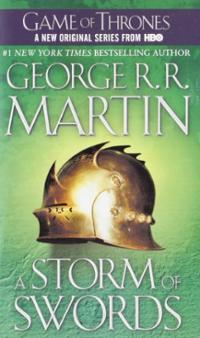
Do authors with multiple titles have it any easier? Is it like picking names from a hat to decide who you'll honor with Book No. 12 or 20? Agatha Christie started off her prolific career dedicating to her mum, and then got around to all sorts of people, including some friends whose swimming pool stood in for the scene of one of her many murders. George R.R. Martin, whose epic series became the stunningly popular HBO show Game of Thrones (among other things), gave a shout-out to a fellow fantasy author when he wrote the dedication for this book:
For Phyllis, who made me put the dragons in.
No word as to whether Phyllis Eisenstein would have preferred that Martin mention her last name so his zillions of fans could more easily Google her.
I posed a couple of questions about dedications on Facebook recently, as I struggled with one for my new book. The first thing I wanted to know is whether they're even important. Overwhelmingly, authors and readers said yes. Some prefer that dedications maintain some mystery; others like more specific information as a window into the writer's life. I love funny dedications, like children's author Spike Milligan's:
This book is dedicated to my bank balance.
Even so, I've never written a knee-slapper, even though my series is humorous. In fact, one of my book dedications can still make me cry. My younger brother died while I was writing my third book, Mama Rides Shotgun. My dedication for that one was more a memoriam:
To my brother, Kevin Sharp ... gone too soon, just like Daddy. With strong hearts in heaven, I hope they're knocking those baseballs out of the park.
How about you? Do you read dedications or skip them? Do you have a favorite one?
Today, Saturday, June 15th, Beth Groundwater will sign copies of her Fatal Descent release twice during the FIBArk (First in Boating on the Arkansas) whitewater festival in Salida, Colorado. The first signing will happen after the parade from 10:30 AM - Noon at The Book Haven bookstore, 128 F Street, Salida, CO 81201. The second will take place in front of the Boathouse Cantina restaurant across the street from the festival grounds from 1:30 - 4:00 PM. Fatal Descent is the third book in Beth's RM Outdoor Adventures mystery series, and the first book, Deadly Currents, takes place during FIBArk. Also, Beth was the FIBArk parade VIP guest in 2011.
Sunday, June 16th, from 2:00 - 4:00 PM Beth Groundwater will sign copies of her Fatal Descent release at the Breckenridge Welcome Center, 203 South Main Street, Breckenridge, CO 80424 during the Breckenridge Kingdom Days Sidewalk Sale. The signing will take place right after the Outhouse Races end.
Thursday, June 20th, at 7:30 AM MST, Beth Groundwater will appear on the Tron Simpson show, 1040 AM in the CO, NM, KS broadcast area and on-line at i25talk.com. Tron will give away a signed copy of her Fatal Descent release to one listener.
Thursday, June 20th, from 5:00 - 8:00 PM, Beth Groundwater will sign copies of her Fatal Descent release at the Covered Treasures Bookstore, 105 Second Street, Monument, CO 80132 during Monument's June Art Walk event.
Friday, June 21st from 5:00 - 7:00 PM, Beth Groundwater will sign copies of her Fatal Descent release at Black Cat Books inside the Business of Art Center, 513 Manitou Avenue, Manitou Springs, CO 80829. This will be a wine and cheese event!