Showing posts with label crime fiction. Show all posts

Thursday, January 21, 2016

5 Sure Signs That I Can Let Go of My Manuscript (Finally!)

By Lisa Alber

Over the weekend, I read a printed copy of my manuscript for WHISPERS IN THE MIST (August 2016). I read it fast, looking out for loose ends and moot remnants still hanging around from previous versions.

At this point in the writing process, I always know that I'll feel compelled to read the manuscript just one more time before hand off, and I know I'll still find things that need fixing, and I know I'll worry about whether the newest changes have themselves caused inconsistencies (or typos!) that will require me to re-read the manuscript AGAIN ... 

It could go on forever, but there comes a point when I have to let my baby go. Given that I can always continue improving my stories, when do I feel that "yes" feeling about letting a manuscript go?

1. The latest manuscript read-through was mostly clean. Changes were only for clarity, consistency, and pruning. Nit-piks.

2. I have no more questions to myself about nitty-gritty plot points. (My stories are kind of complex.) Yes, all the bits and pieces are there.

3. I've considered every piece of beta reader feedback. I've incorporated what my gut says "yay" about, and I've ignored what my gut says "nay" about.

4. I've gone through a copyedit (as best as I can since I'm not a copyeditor) on my own. I catch a lot of weird prose quirks when I focus on the line-by-line. We all have our easy-way-outs when we're writing. For example, I love m-dashes, but they can be used in place of properly crafted sentences.

This is also when I deal with rhetorical questions, such as this example from a previous draft of WHISPERS:   

Danny still couldn’t fathom why Malcolm had offered up the alibi unless it was to humiliate Danny. But why? Because he was pissed that Danny hadn’t prioritized the graffiti vandalism? Because he didn’t like Danny prying into McIlvoy’s life?

This is just lazy writing. Really. At least for me. A bunch of rhetorical questions in a row tell me I need to go deeper and get to the heart of the matter in a more precise fashion. This might mean adding word count, but that's OK. So now it's this:

Danny still couldn’t fathom why Malcolm had offered up the alibi unless it was to humiliate Danny. He hadn’t prioritized finding the phantom graffiti artist, true, but surely Malcolm understood that vandalism didn’t rate as high as murder.

No, the alibi had to be a good-old-fashioned diversionary tactic. Most likely to distract Danny from prying into Malcolm’s relationship with McIlvoy.
 
5. Last but not least, I've word-searched words I know to be problematic, such as the "just"s and "really"s. Excess adverbs. The verb "was," which could indicate a yucky passive voice sentence or a sentence that needs rewriting with a stronger verb. I have a word list that I keep handy for this tedious, final task.

It's not that I get rid of every "just," "really," and "was" -- but I do consider them carefully. It's so easy to fall back on them -- another easy way out. (Oh, look at that, falling back on m-dashes again!)

Also, during all of this, I'll have noticed other words -- not the usual "blah" words -- that I fell in love with for some reason. For example, while writing WHISPERS, I used "flicker" a lot. Everything was flickering, from candle and sconce light, to gazes, to birds in flight. It was a positive flicker-fest, enough to cause a migraine!

All of this may be tedious, it may add to my writing time, but in end, I love the satisfaction of knowing, beyond a shadow of a doubt, that I've done all that I can do.

There's no such thing as perfection; there's only doing the best we can.

Wednesday, July 29, 2015

For the Love of Crime Fiction


 by: Nina Milton
 
When I tell people I write crime fiction, the one thing I’m not hoping to hear is, “Oh, I never read crime fiction.”

Not because I want them to buy my books, but because I simply don’t believe them. Of course they read crime fiction. They just don’t know it. No way would I admit what I’m actually thinking, which is, “that’s a whole heap of baloney, pal – the literary equivalent of the excrement of the male cow.”

I belong to a local reading club, ten or fifteen of us discussing the books we’ve loved, and sometimes I get that sort of response when introduced to a new member. “A crime fiction series? That won’t interest me, I never read it.” The second part of their little speech hangs in the air, unsaid but perfectly clear– “Crime fiction is way below my reading standard.”

Even when I overhear whisperings in the reading club shadows, “ah, Nina Milton, she’s a novelist with a big US publisher, you know…but it’s only crime fiction…” I don’t bite. I don’t want to be accused of being a “precious author” who can’t take a critique of their work, I just wait, like a cheetah, poised at the edge of the Savannah eyeing up the wildebeests, for the moment they start talking about books…“I love the work of Charles Dickens…” Or, “I’m very into William Faulkner.”


Then I point out, the smile plastered over my face, that Charles Dicken’s Oliver Twist was a story of street kids abused and corrupted by gangs of professional criminals.


Bleak House was a legal thriller that Grisham would have probably been proud to write and The Mystery of Edwin Brood…well, it’s in the title, you fool. As for Nobel Laureate Faulkner, not only did he work on the screenplay of The Big Sleep, but wrote a thriller called Sanctuary.


Edgar Allen Poe
Then there’s Dicken’s friend Wilkie Collins, who’s every novel was a mystery thriller, plus Patricia Highsmith, Edgar Allan Poe and Graham Greene, all writers now studied at college. 

Donna Tartt produces something criminal every ten years or so, to delight serious readers and crime fans alike, recently winning acclaim across the world for The Goldfinch, the story of a stolen painting. And, as if to prove my point, Scottish novelist Kate Atkinson recently won literary prizes for her surprising and memorable book, Life After Life, straight after publishing  her “Jackson Brodie” series about a DI turned private eye. These have already been adapted for British TV as Case Histories, and Shonda Rhimes is developing a pilot called The Catch for the US market.

And did you know that Mark Twain’s Huck and Tom solved a murder and collected $2000 in Tom Sawyer, Detective? Twain was also the first writer to use fingerprints in his short story, The Thumbprint and What Became of It.

We haven’t even got started on the many crime novels which have been showered with accolades from the literary giitterati; writers like Dashiell Hammett, Elmor Leonard, Raymond Chandler,  Steig Larsson, Peter Hoeg, Georges Simenon. And of course, P D James, who, in her latter years, also wrote a mystery sequel to Pride and Prejudice, Death Comes to Pemberley.

In fact, it is difficult to write a book, even one that is likely to reach literary heights, without there being an element of mystery within it, without it being thrilling, and without, underneath all of this, some sort of dark secret. I believe it’s the crime writer who best reflects their society, and all shades.

In any case, it’s hard to define exactly what makes a book “good literature”, but I think most people would go with the books which raise questions for the reader, especially about the validity of society’s morals, which is written with style, so that every sentences gets you thinking, and yet is beautiful in its own right.

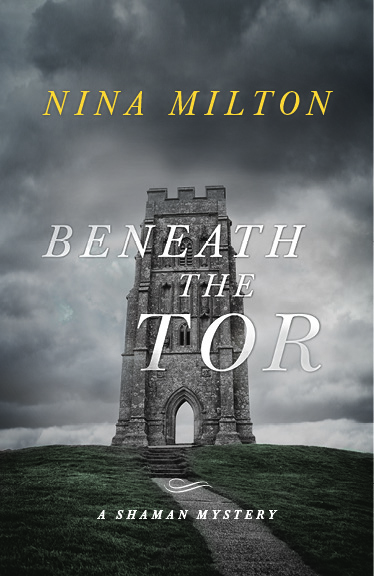
I don’t pretend to be a literary writer, but I do attempt, right from the start of plotting each of my “Shaman Mystery” novels, to explore the themes I’ve chosen with some depth, and within that, to examine what it is to be human. I do that by choosing crimes that are deeply evil in some way, and observing how people cope, react. In the Moors examines the appalling crime of pedophilia. Unraveled Visions looks at how desperate people seek a better life in a new country to only become exploited. Beneath the Tor, due for release in December 2015, will investigate the “legal hi” problems and mental health issues. Because my heroine is a shamanic therapist with a big heart, I always feature the victims and their families in my books, as well as the law enforcers and the criminals. These are the people Sabbie Dare is interested in helping.

I think P. D. James put it well; A detective story can give a much truer picture of the society in which it’s written than a more prestigious literature…crime fiction confirms our belief, despite some evidence to the contrary, that we live in a rational comprehensible and moral universe.


                                                            Ends.


The 1st Shaman Mystery, IN THE MOORS -“Sabbie Dare is the most compelling protagonist I’ve met this year...Milton’s tale is riveting.”—Library Journal (starred review)


The 2nd Shaman Mystery, UNRAVELED VISIONS
“[A] thrilling tale.” —RT Book Reviews


"The depictions of shamanic journeying are vivid and authentic. Reading BENEATH THE TOR kept me up at night much later than I wanted, because I could not bear to miss the next bit."—RONALD HUTTON, AUTHOR OF THE TRIUMPH OF THE MOON, SHAMANS, AND PAGAN BRITAIN


Nina Milton (Wales) has been publishing short stories and children’s books for thirty years. She’s won many literary competitions, including the Crossroads Competitions, Kent Festival Prize, and the Wells Literary Shirt Story Competitions. She enjoys exploring the magical landscapes of Britain with her husband, James. Visit her blog at http://KitchenTableWriters.Blogspot.com


Friday, May 30, 2014

INK SPOT NEWS - JUNE RELEASES~

Take a look at these fantastic titles--Just in time for summer reading!


Never Alone
C.J. Carpenter
A Megan McGinn Novel #1
"NYPD detective Megan McGinn plays fast and loose with the rules in this fascinating debut" —RT BOOK REVIEWS


Resurrection Bay
By: Wayne McDaniel, Steven Womack
From Edgar Award-winning author Steven Womack and Wayne McDaniel comes a force of evil on par with Hannibal Lector in a heart-pounding page-turner you can't put down.

Wednesday, June 12, 2013

The Devil in the Details

By: Maegan Beaumont

He rolled up the make-shift tarp he’d laid out on the kitchen floor and placed it in a trash bag along with the dress. Undiluted, he poured the ammonia onto the kitchen floor and chair. While ammonia didn’t destroy DNA, any evidence gathered there would be corrupted by the chemical and rendered useless. The ammonia was strong-smelling, so he opened a few windows for ventilation. The early afternoon breeze made the chore of cleaning up his mess almost pleasant.
—Carved in Darkness

It took me nearly three weeks to write this paragraph. It wasn't writers’ block or a computer crash that bogged me down—it was my almost obsessive need for accuracy.

And it wasn't just this passage I nitpicked. It was the entire novel. I scoured the internet. I read books. I logged onto forensic forums. I emailed cops and asked them what I’m sure they thought were inane and possibly dangerous questions. I spent what felt like an entire summer in handcuffs because I was trying to teach myself how to pick my way out of them. After cutting myself in a kitchen mishap, I soaked the wound in salt water (If you've read CARVED, then you understand the significance). I've even gone so far as to have a very distraught friend of mine drive me around in the trunk of her car... all so I could be sure that what I was writing was as close to the truth as I could get it. Don’t get me wrong, I ask my readers to suspend disbelief on a regular basis but I can do so because I know one simple rule: 
The most effective lies are found buried in the truth.  

So, yes... I do lie. I do make stuff up, I write fiction, after all... but readers are smart.  They know things, because they read, and they don’t like it when a writer is too lazy to do their research. I know this because as a reader, I feel exactly the same way. I don’t mind being lied to as long as I know the writer took the time and made the effort to make me believe the lie.

The key to great fiction isn't writing what you know--it's writing what you can make others believe that you know, and that takes work. Hours of research. Reading and reaching out to people who can lend authenticity to my writing, but when a reader asks me if I've ever tortured someone (yes, someone really asked me that... and the answer is no) or a reviewer mentions how impressive my attention to detail is, I know it's worth it.

So, my question is: How important is accuracy in writing to you? How do you feel about shoddy research? How do you feel about writers who don't take their research seriously?


"Prepare to be overwhelmed by the tension and moodiness that permeates this edgy thriller. Beaumont’s ability to keep the twists coming even when the answer seems obvious is quite potent."
 ~ Library Journal


Maegan Beaumont is the author of Carved in Darkness, book one in the Sabrina Vaughn thriller series, on sale now.

Wednesday, December 19, 2012

Motivation, Hitchcock and Why Cheaters Never Win


I was watching The Girl the other night and something Hitchcock said to Tippi Hedren has stuck with me. I can’t stop thinking about, even days later, and how it plays to the vanity of Hitchcock (specifically) and writers (in general).
In the scene where Tippi (played by Sienna Miller) and Hitchcock (played by Toby Jones) discuss her character’s motivation for going into the attic alone, knowing there would be birds there, (they were filming The Birds at the time). Tippi asked, “Why would Melanie go into that attic all alone?”
Hitchcock replied, “Because I want her to.”
Because I want her to.
While a cinematic genius like Hitchcock might be able to get away with that, for a lowly novelist like me, writing takes a bit more work. Just because I want my characters to do something, doesn’t mean I should make them do it. There has to be a reason my characters do and say the things they do and it's my job to give them that reason.
It's called motivation.
Motivation is what a writer weaves throughout a plot to bind it tight. Motivation is what makes even the implausible seem possible. Even the most unlikely seem inevitable. But what is it? A traumatic past? Money? Love? Revenge?
I can’t simply decide I want my protagonist to rob a bank or rescue a bunch of kids from a burning orphanage. There has to be a trigger that sets them on the course. Are they days away from losing their home to foreclosure? Is their child in need of a lifesaving operation and the insurance company refuses to pay. Did they lose a loved one to a fire? Did they grow up in an orphanage themselves?
These are seeds from which future action grow and if you want your novel to feel real, they must be planted. From these seeds should sprout a chain of events, fed on emotion and tended by circumstance, that will inevitably lead your protagonist to a place where the life-altering decisions they make are the only ones that make sense.
Look at it this way...
If a novel is a vehicle, then motivation is the fuel in the tank. It makes us move and takes us places. Maybe even places we never had any intention of going. Places we don't want to be... places we have a hard time visiting. If there's no gas in the tank, that vehicle isn't moving. But if you put the wrong kind of fuel in the tank then your vehicle breaks down completely. It becomes an undriveable hunk of crap that noboby wants to drive. Or read.
When Hitchcock sent his character into that attic full of live, pissed off birds, he wasn’t sending the character—he was  sending Hedren. He allowed his personal motivation to color the actions of his character… and in doing so, changed the movie completely.  
It was no longer about the story itself at all. It was about Hitchcock’s desire to punish Hedren for finding him repulsive. In punishing Hedren, Hitchcock gave us a peek behind the curtain. Even though we may not have known it at the time, we saw a writer at work and that is something your reader should never see.
The stories we write should be seamless.  Our characters should be fully formed, with their own set of experiences that give their choices weight and purpose and the conclusion those choices lead them to should seem inevitable.  
Anything less would be a cheat—to myself as a writer and to people I write for.
Maegan Beaumont is a native Phoenician,currently stuck in suburbia with her high school sweetheart and husband, Joe, along with their four children. She writes take-you-to-the-edge-of-your-seat thrillers, loves action movies and spending time with her family. When she isn’t busy fulfilling her duties as Domestic Goddess, she is locked in her office with her computer, her coffee pot and her Rhodesian Ridgeback and one true love, Jade.


Monday, April 6, 2009

Castle Keep

My dad was an artillery spotter in World War II. I never understood why after having seen the truth of the battlefield, he so enjoyed reading novels, seeing movies, and watching TV shows that took place during the War. I think his favorite TV show of all time was Combat.

Well, maybe I understand now. I guess we can't resist those self-referential stories. I loved Gregg Hurtwitz’s The Crime Writer. Guess why? (Beyond the great writing, clever plot, and terrific hero, I mean.) Because it was about a crime writer, and that’s what I am.

All this is a long-winded way to get around to admitting that there’s a new TV show with no high pretensions which I make sure I see every week. No, it’s not anything hi-falutin like a PBS miniseries or a succès d’estime like Mad Men or even a popular hit like Grey’s Anatomy. It’s Castle. Guess what the protagonist does for a living? Yes, he’s a crime novelist.

You see Richard Castle is a huge, best-selling author who’s run into a patch of literary infertility. So he asks his pal, the mayor of New York, if he can tag along with a police detective to get inspired. Sure, happens everyday, right?

Needless to say, the police detective is tall, leggy, dark-eyed, brunette, and smart. (Bias disclosure: I married a woman who is tall, leggy, dark-eyed, brunette, and smart.) Castle has a know-it-all daughter. (Bias disclosure: I have three of them.) Castle plays poker with the real-life James Patterson and Stephen J. Cannell. (Bias disclosure: I am bursting with envy.)

The identity of the guilty party is pretty clear by twenty minutes in the show. Doesn’t matter. What makes the whole thing worth watching is the répartée between the detective and Castle. Yes, it’s derivative. Cybill Shepherd and Bruce Willis did pretty much the same thing on Moonlighting a generation ago. But who cares? Moonlighting was a great show. About every ten minutes in Castle, either the detective or writer delivers a line where I think, “Gosh, I wish I’d written that one.” I’m willing to pan through a lot of gravel to get to that nugget.

The show airs Mondays at 10. Last week it finished behind CSI Miami but ahead of Medium. I really enjoy the show and, as night follows day, that means it is not long for your TV set or DVR. Catch it while you can. Take a look tonight and let me know what you think.

Wednesday, February 25, 2009

Crime Fiction: Cure for (a) Depression?

One friend who lost her job told me she couldn’t really face the world just now. She wanted to hide from decisions on what to do next or where the money needed to support her family would come from. So what did she do? Take to her bed with a stack of crime fiction.

Perfect. In an age when malefactors abscond with millions stolen from charity while hard-working souls get laid off, why not escape into the world of crime fiction? In that world criminals get their comeuppance and the innocent triumph. As we turn the pages, we move from balance to disequilibrium and back to balance. Ah, if 2009 America (and Canada and the U.K.) were only that simple.

Not only can a piece of good crime fiction provide the escape we need, it can do so for almost nothing. I sold books at the LA Book Festival alongside my friend Cara Black, who writes the bestselling (and terrific) Aimée Leduc series. She’d say to passersby, “Do you want to go to Paris for $13?” What a pitch in these near-depression times!

So bookstores must be chock-full of eager readers, right? Judging from a few recent conversations with bookstore proprietors here in the Bay Area, I don’t think so. They're complaining about the business lassitude like the rest of us. Here’s my real question then: Why aren’t crime fiction sales picking up during this Great Depression II?

Keith

P.S. Hats off to fellow Inkspotters G.M. Malliet and Joanna Campbell Slan. Gin’s Death of a Cozy Writer and Joanna’s Paper, Scissors, Death were nominated for the Agatha Award for best first novel. CONGRATS!

P.P.S. Normally, Agathas are determined by voters at the Malice Domestic Conference May 1-3. Gin is threatening to settle this one via an arm wrestling contest. I just hope it’s webcast live.