Keith Raffel, acclaimed writer of Smasher, is famous for his love of  green tea. He’ll be the first to tell you he has a multi-cup habit, and as I type and drink my red wine, I wonder if “green tea” is a euphemism for something a bit edgier. (Sorry, Keith. It’s all those undergrad psych classes catching up with me. Or the red wine.)
The myth of the drunk writer is long and storied (ha! storied): Truman Capote, while writing In Cold Blood, got so drunk one night 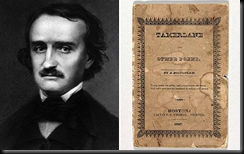 that he fell on the pavement, chipping his teeth and smashing his head open. Jack London tied his first one on at age five. Hemingway swigged tea and gin for breakfast and absinthe for lunch. And don’t forget Edgar Allen Poe, Steinbeck, Lowry, Faulkner, O'Neill , Parker, and Sinclair Lewis.
Are these stories aberrations? Not according to the American Journal of Psychiatry, which in a study found  that 30 percent of writers were alcoholics, compared with 7 percent in the comparison group of nonwriters. The author of Alcohol and the Writer discovered that after bartenders, more writers die of cirrhosis of the liver than people in any other occupation (but maybe he was drinking when he wrote that).
So what gives? Is Freud correct in his assertion that creativity is a response to emotional pain, and artists are simply suffering more than the average folk? Or is it the necessarily lonesome life of the writer that makes us more likely to self-medicate?
I’d like input on this from both drinking and non-drinking writers. And for the record, I have a hard time remembering to blink both eyes simultaneously after a couple glasses of red, forget writing a novel.


